How does a local barber shop turn a simple blog post into a traffic-generating machine?
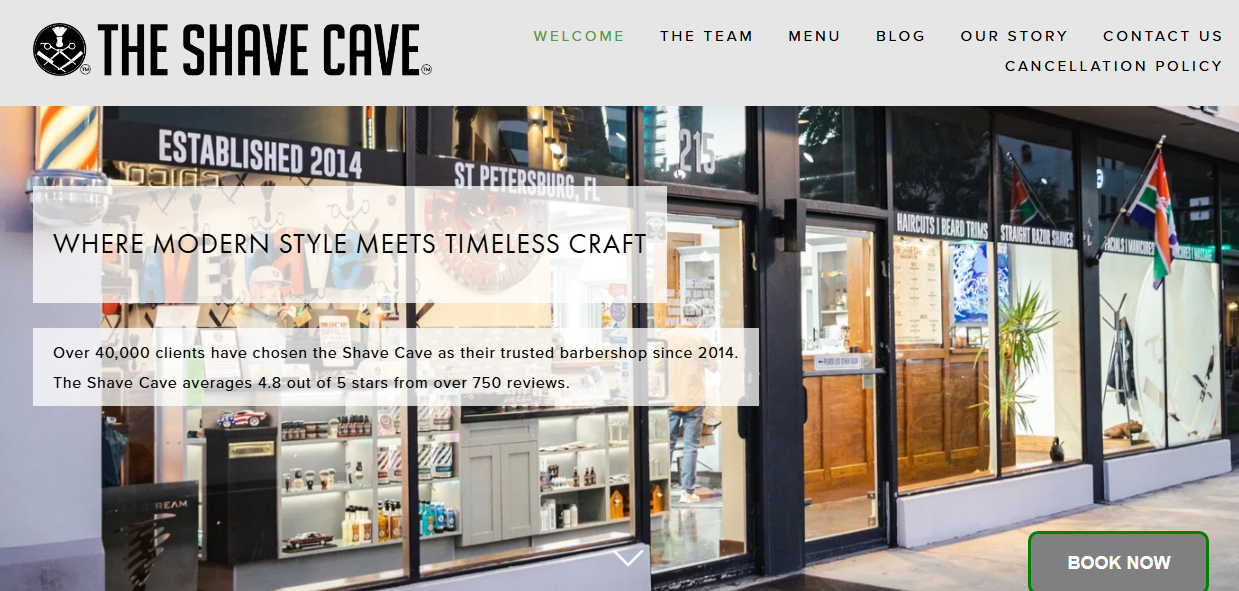
Meet The Shave Cave. A popular men’s grooming center in St. Petersburg, Florida.
In 2025, this local staple skyrocketed website traffic by an astonishing 2,275% in just 3 months. This increase took their monthly organic visits from 30.6K to nearly three quarters of a million.
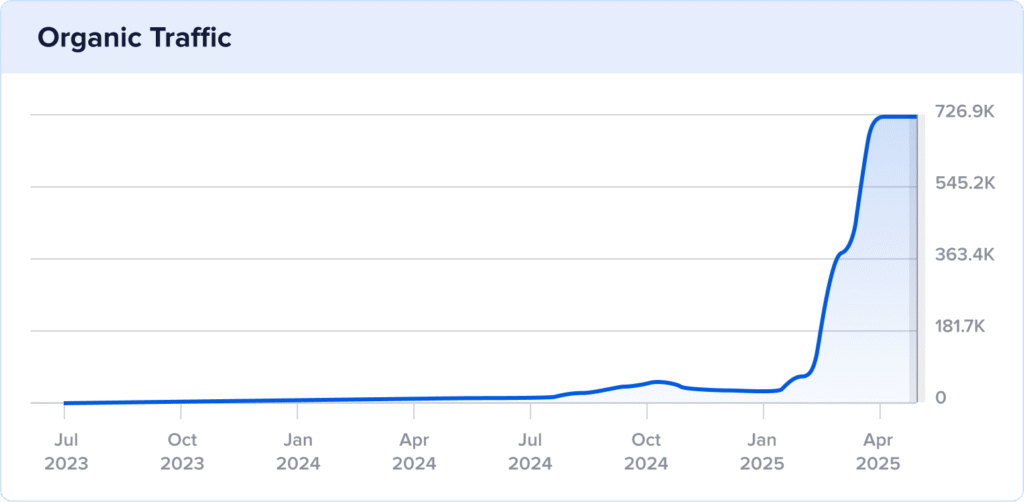
In this SEO case study, we’ll explore the blog strategy that launched their organic success.
1. A Single Blog Post Generates 90% of All Site Traffic
The Shave Cave’s incredible traffic growth can largely be attributed to a single, high-impact blog post: “Top 25 Men’s Hairstyles for 2025.”
This post alone accounts for an astonishing 90.16% of their total site traffic, showcasing the power of a well-crafted article in a targeted niche market.
At the heart of this success is the content’s on-page SEO.
This post aligns with search intent, providing easy access to different hairstyles for men. To reach users searching for this information, The Shave Cave targeted the appropriate keywords in their content.
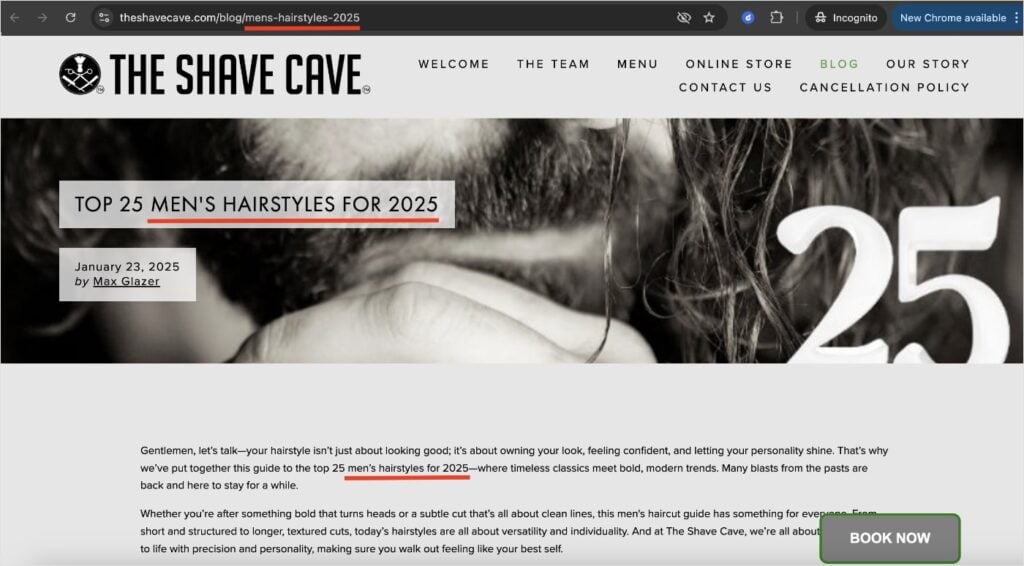
For example, the focus keywords “mens hairstyles” and “mens hairstyles 2025” appear in the following critical areas:
- H1: This is the main title of the article. It’s typically the first thing users see when reaching a web page.
- Introduction: This section has a direct impact on bounce rates. Keep it engaging and use your primary keyword for best results.
- Subheadings: These headings organize the content, making it easier for users to navigate the page.
- URL: The URL slug includes the main keyword, providing another signal to search engines and making it clear and informative for users.
Here, you can see some of these optimizations in the blog post itself:
Furthermore, The Shave Cave understands the importance of using related keywords to enhance the article’s visibility.
Related keywords have the same search intent as your primary keyword. The address the same user and topic (or closely related topic) to expand coverage for a broader keyword net.
Some examples for The Shave Cave’s article include “mens hairstyle guide” and “top mens hairstyles.”
Ultimately, this helps them reach a wider audience without keyword stuffing.
The results?
Of The Shave Cave’s 88.8K keyword rankings, this blog ranks for 82.1K of them.
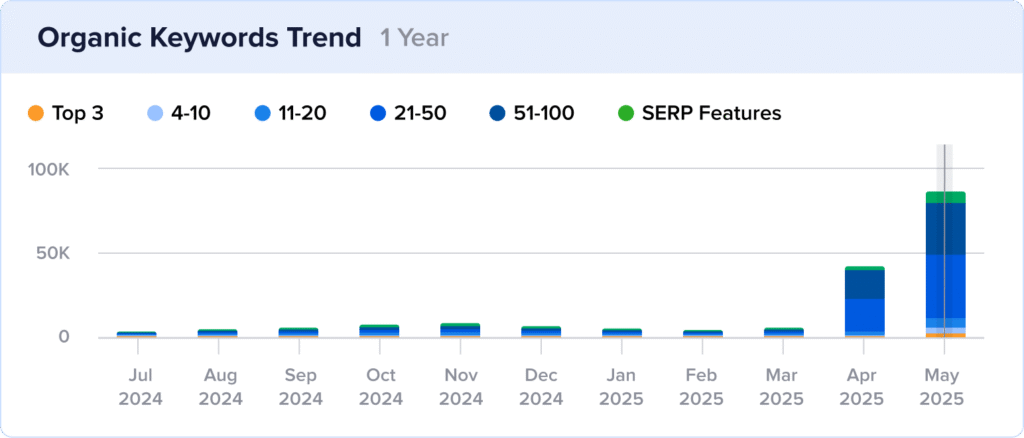
Furthermore, The Shave Cave blog contributes 100% of all keyword rankings.
Why This Matters:
The Shave Cave’s use of on-page SEO demonstrates a clear understanding of how important it is to target the right keywords. By optimizing for queries related to your business, you can increase your visibility to potential customers.
Their targeted approach has several benefits, including:
- Improved Rankings: The targeted placement of keywords boosts the blog post’s position in search results.
- Higher Engagement: Attracting users who find the content genuinely helpful reduces bounce rates and increases the likelihood of conversion.
- Traffic Sustainability: This SEO strategy ensures a steady stream of organic traffic without the ongoing costs associated with paid marketing tactics.
Overall, it’s a core SEO best practice that belongs in every website owner’s digital marketing arsenal.
How to Do On-Page SEO:
On-page SEO isn’t complicated or necessarily hard, but it does require a strategic approach.
Here’s a quick overview of the most important steps we cover in our on-page SEO guide:
- Perform keyword research.
- Select your focus keyword.
- Optimize your SEO title tag.
- Optimize your meta description.
- Include your keyword in image optimizations.
- Add internal and external links.
- Optimize your URL structure.
For a full explanation of each step (and more), check out the guide linked above the list. It’s very beginner-friendly and walks you through the entire on-page SEO process.
2. Comprehensive Topic Coverage Boosts User Engagement
Another key to The Shave Cave’s success is their ability to create content that thoroughly covers the subject.
Their blog post, “Top 25 Men’s Hairstyles for 2025,” does more than just list styles. It offers a rich user experience that covers all facets of the subject.

For example, each of the 25 hairstyles is complemented by:
- High-Quality Images: Each style uses a photo to illustrate the result while enhancing visual engagement.
- Detailed Descriptions: The author describes each style, the hair type it’s best suited for, and instructions for achieving the look. This approach ensures the information is useful and actionable.
- Internal Links: The Shave Cave links to other pages on its website, encouraging content discovery. Unfortunately, these hyperlinks don’t stand out against the regular text. This makes it practically impossible for users to find them. (Search engines can, though. Still, I’d highly recommend The Shave Cave to change their hyperlink style to be easily visible.)
Ultimately, these strategies turn what could be a basic list into an engaging resource.
Why This Matters:
High-quality content is the top Google ranking factor in 2025. Because of this, The Shave Cave’s comprehensive content strategy is more relevant than ever.
By providing thorough, well-structured content, they achieve several benefits for their website:
- SEO Performance: Comprehensive and detailed content is favored by search engines, leading to improved rankings. This ensures that The Shave Cave’s content is more visible to potential customers searching for men’s grooming tips and styles.
- User Engagement and Retention: Offering high-quality images and detailed instructions enhances the user experience, keeping visitors engaged longer and encouraging them to explore additional content.
- Authority Building: Providing valuable information in an accessible format establishes The Shave Cave as a trusted authority in men’s grooming. This credibility not only fosters customer loyalty but also encourages positive word-of-mouth and referral traffic.
Incorporating comprehensive topic coverage doesn’t just attract users; it turns them into repeat visitors and potential customers.
This strategy underscores the importance of quality content in building a successful digital presence in today’s competitive market.
How to Build a Content Optimization Strategy:
This tutorial shows you how to design a content strategy that improves your rankings.
Here’s a quick overview of the process:
- Use content optimizations tools for SEO.
- Get to know your target audience.
- Set SEO goals that align with your business objectives.
- Perform keyword research.
- Use the on-page SEO techniques discussed in the previous strategy.
- Optimize your technical SEO (like loading times and site crawling).
- Analyze your SEO performance and adjust as necessary.
At its core, creating high-quality content is about knowing your audience and aligning your content to their needs. By doing this, you can simultaneously improve user engagement and keyword rankings.
Content Optimization Tools:
AIOSEO has an AI Writing Assistant that makes it easy to create in-depth, SEO-optimized content right in WordPress. This tool integrates with your SEOBoost account to provide content optimization suggestions directly in the Editor.
For example, the Overview tab shows you the average word count of top-ranking content along with the readability level. This can guide your writing without needing to manually analyze the top search results for your desired keyword.

I also really like how the Optimization Wizard provides additional keyword ideas related to your main topic. This is particularly helpful for ensuring comprehensive topic coverage and maximizing your page’s visibility in search results.

Overall, AI Writing Assistant streamlines the content creation process for writers of any level. It’s intuitive, effective, and provides real-time feedback.
3. Image SEO Increases Visibility in SERPs
In our previous section, we discussed how The Shave Cave uses images to improve engagement.
However, merely using images isn’t enough if you want to maximize your website’s search potential
Search engines can’t “see” images like humans, so just putting them on your webite only takes of site visitors. (Obviously, this is hugely important, but you want to rank too, right?)
To accomodate the other half of the question (i.e., search engine crawlers), you need to make your images SEO-friendly.
This means optimizing them in a way that search engines can understand.
The Shave Cave does a good job of this by implementing the following image SEO best practices:
- Writing descriptive alt text that accurately describes the image
- Using keyword-rich image file names
- Adding relevant schema markup to posts and pages
Let’s look at a quick example.
Here’s an image of a style they call “long curly hair fade.”
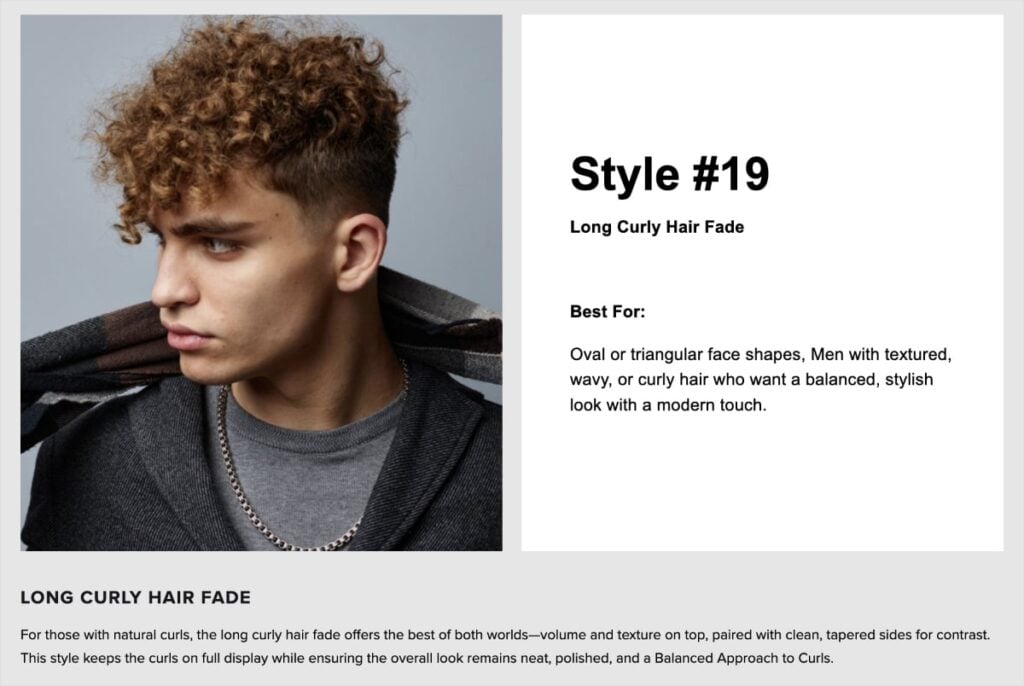
And here are image optimizations for it:
- Alt text: Long curly hair fade men.
- Image file name: Long-Curly-Hair-Fade-Men.jpeg
- Schema markup: Article schema with ImageObject attributes
These image optimizations have been pivotal in The Shave Cave’s visibility in search results.
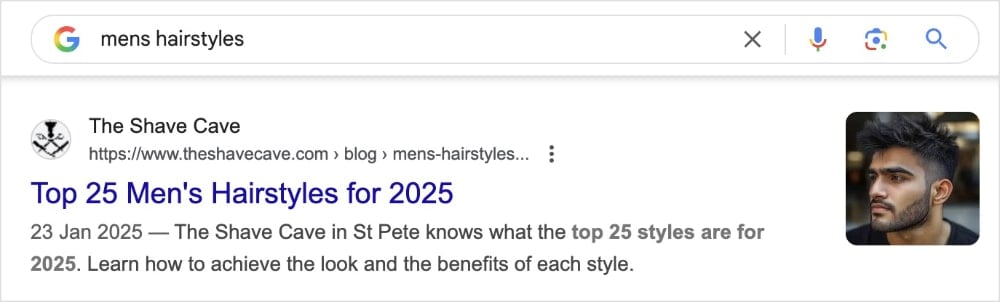
Not only have they earned them image snippets, which capture user attention…
… but they’ve also earned them rankings in Google’s Image Pack, which features image at the top of standard search results.
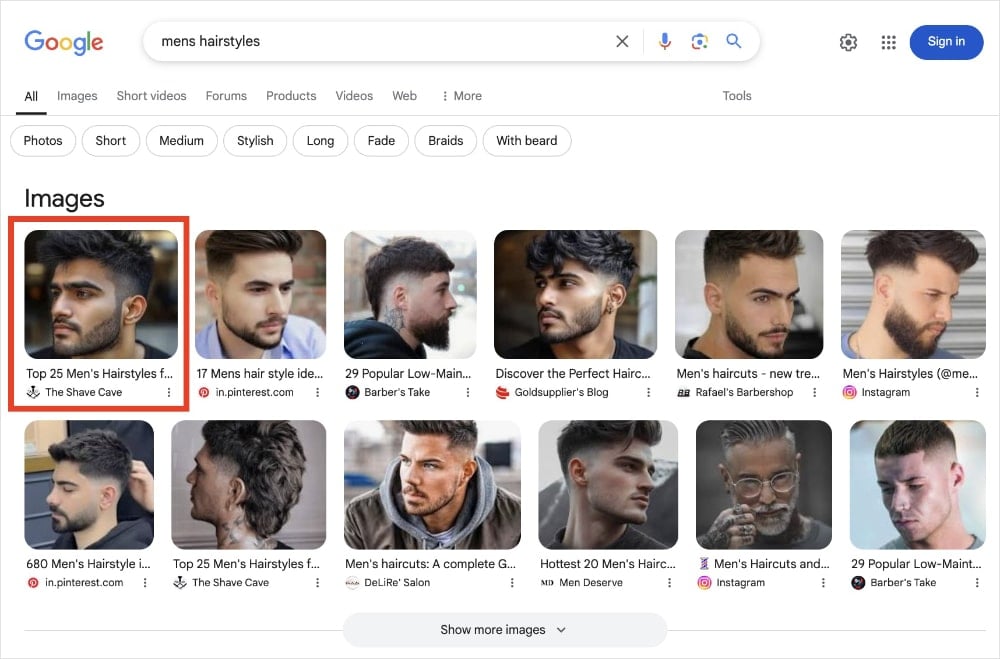
Both types of of SERP features are instrumental for driving clicks and organic traffic.
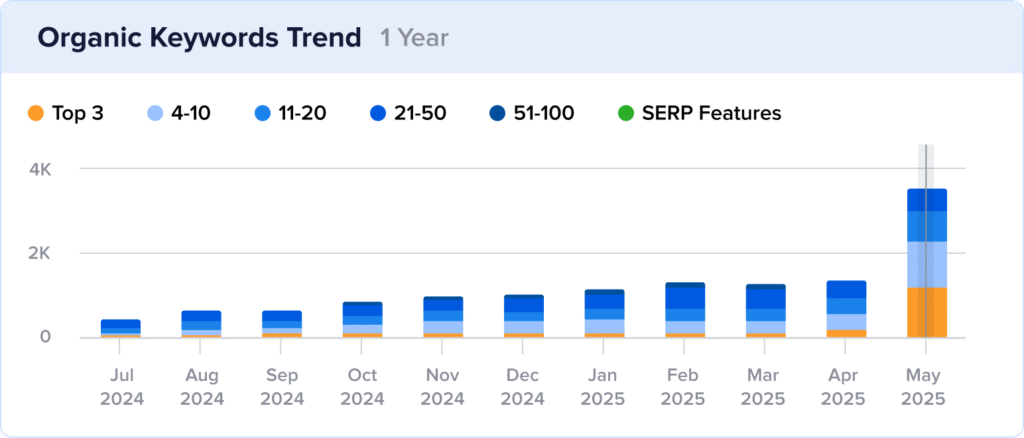
Overall, The Shave Cave earned 3.7K rankings with image snippets in May. (Notice how many are in the top 3 positions, too!)
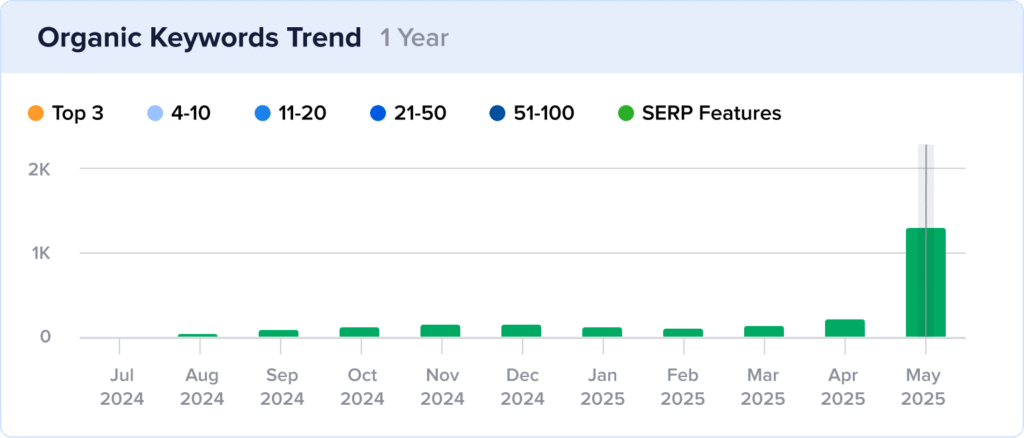
And 1.5K rankings in the Image Pack, proving the efficacy of their image SEO.
Why This Matters:
With over 1 billion searches on Google Images every day, optimizing your images for search is non-negotiable in 2025. Here are some of its greatest advantages:
- Increased Visibility in SERPs: By appearing in image snippets and Google Image Packs, you capture prime SERP real estate. This can dramatically increase your clickthrough rates (CTR).
- Competitive Advantage: In visually intensive markets, being featured in SERP features can set you apart from competitors. High-ranking images across top positions highlight your brand’s appeal, attracting more potential customers.
- Improved Accessibility: Including descriptive alt text not only improves search engine comprehension but also enhances accessibility for users with visual impairments. This commitment to an inclusive user experience builds trust and boosts user engagement.
Ultimately, image SEO is a win-win for everyone. Users get a better UX, search engines can more easily understand your content, and website owners can improve their visibility.
How to Do Image SEO:
Image SEO is pretty straightforward. You just need to know what to optimize and have a primary keyword in mind.
Let’s look at how to optimize image in WordPress:
- Write clear alt text that describes your image. Find a good balance of providing enough context without getting too detailed.
- Use SEO-friendly image file names. Instead of naming your image “image193383.jpg,” use something more descriptive, like “dog-food-for-puppies.”
- Include captions when helpful. Captions can provide additional context when explaining screenshots, graphs, etc. Use them wisely.
- Chose the right image format. There are several formats you can upload to WordPress. JPG is good for images with lots of colors, PNG is high-resolution, and GIF is for animations.
- Create an image sitemap. Sitemaps tell search engines when you update or publish new content. Use an image-specific one to share your latest images as soon as they’re on your site.
These are just 5 best practices, but for even more ideas, check out our image SEO tutorial. It has 18 tips for optimizing images for greater visibility.
Image SEO Tools:
Image SEO is necessary, but tedious.
The good news is that you can use SEO tools to streamline their optimizations.
AIOSEO is an image optimizer plugin that helps you make your images search-friendly automatically. It uses dynamic smart tags that you can customize for various image elements such as, your image titles, alt text, captions, and more.
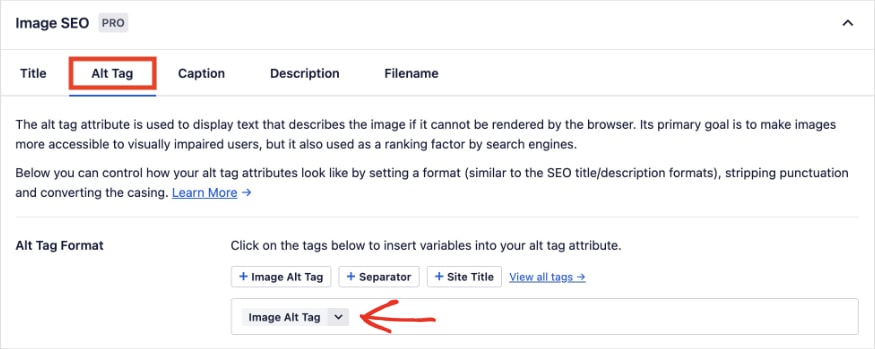
It’s a sure-fire way of guaranteeing no image is overlooked when creating content.
Plus, I like how you can make individual edits on each post or page, too. That means you can have the smart tags as a back up but are free to make edits for any image on your site.
Standout SEO Wins
In addition to the strategies above, there’s a final SEO win I’d like to highlight for The Shave Cave:
Topical Authority Earns AI Overviews
Google’s latest SERP feature, AI Overviews, have become the talk of SEOs and digital marketers. These search results use generative AI to answer a user’s query directly in SERPs.
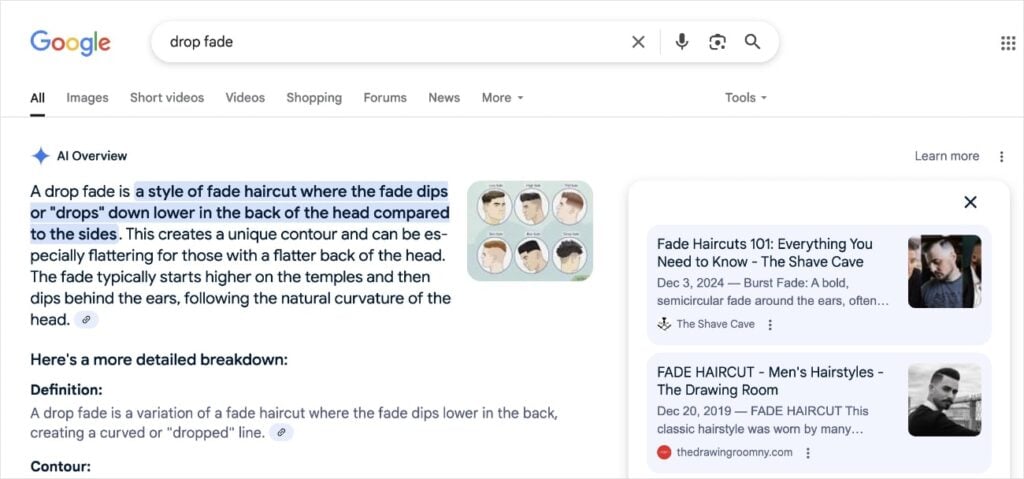
To the right of the AI Overview, users can view the resources used to generate the response. This is where your website can appear.
And for The Shave Cave, they’ve successfully tapped into this new SERP feature.
By May, they’ve already acquired approximately 276 rankings in AI Overviews.

So, how’d they get them?
While there are no concrete methods to getting any type of SERP feature, there are best practices for optimizing your content to appear in AI Overviews.
Here are just a few:
- Establish Topical Authority: The Shave Cave covers men’s grooming topics thoroughly. It’s clear what the website is about and they type of content and services they offer.
- Answer Popular Questions: They address specific user queries with clear, direct answers. This format is easy for Google to use in SERP features, including AI Overviews.
- Optimize for E-E-A-T: They demonstrate Experience, Expertise, Authoritativeness, and Trustworthiness with content that shows first-hand experience.
- Build Your Brand: The Shave Cave is present on several social media platforms and has over 700 Google reviews. Google wants to use trusted sources in AI Overviews, so creating a cohesive online presence is crucial.